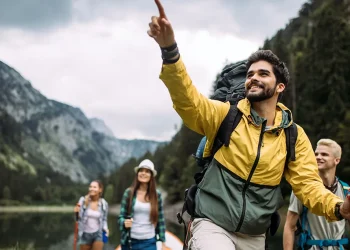
Introduction: The Call of the Wild
Adventure is one of humanity’s oldest impulses, woven into our very DNA since the first nomads wandered beyond familiar horizons. To adventure is not merely to travel, but to step willingly into uncertainty, to test the edges of comfort, and to emerge changed. In today’s hyper-connected world, the spirit of adventure has evolved—it is as much a mindset as it is an action, a deliberate choice to seek out the unfamiliar and relish its lessons.
The Many Faces of Adventure
Adventure wears countless masks. For some, it is a rugged trek through the Andes; for others, it is launching a startup in a volatile market. The common thread is risk embraced in pursuit of discovery. While classic images of adventure conjure mountain peaks, ocean crossings, and dense forests, there is equal merit in everyday bravery. Choosing to speak up for a cause, moving to a new city alone, or picking up a new language past middle age—all these are modern forms of adventure.
Why We Seek Adventure
Psychologists have long studied our innate thirst for novelty. The thrill of the unknown sparks dopamine, but deeper still lies a desire to break free of monotony. Humans need challenge as much as they need comfort. Without periodic tests of our limits, life flattens into routine. Adventure reawakens our senses, reminds us we are alive, and humbles us before forces larger than ourselves.
Core reasons we crave adventure:
-
Growth: New experiences build resilience and adaptability.
-
Connection: Adventures often forge deep bonds with fellow travelers or locals.
-
Perspective: Exposure to different cultures and landscapes reshapes narrow viewpoints.
-
Joy: Few things rival the childlike wonder of discovering something for the first time.
The Art of Adventuring Responsibly
Romantic as it sounds, adventure comes with a duty. The 21st-century explorer must tread lightly. Respecting cultures, minimizing environmental impact, and supporting local communities are not optional—they are essential. The rise of eco-tourism and community-based travel reflects a growing awareness that adventure should uplift, not exploit.
Principles for responsible adventure:
-
Leave no trace: Pack out what you bring in.
-
Respect local customs: Learn basic phrases and traditions.
-
Support local businesses: Stay in homestays, hire local guides, buy regional crafts.
-
Be mindful of wildlife: Observe, never interfere.
Cultivating an Adventurous Mindset
True adventurers are defined less by where they go and more by how they approach life. One can travel the world yet learn nothing, or stay put and see the extraordinary in the ordinary. Cultivating an adventurous spirit means greeting the unexpected with curiosity rather than fear. It requires flexibility, humility, and a willingness to fail spectacularly—and try again.
Small acts of courage build this muscle:
-
Take a different route home
-
Talk to a stranger in a café
-
Try a dish you can’t pronounce
-
Spend a day offline, wandering aimlessly
These modest risks accumulate into a life that feels textured, vivid, and profoundly human.
Stories from the Trail
Consider the solo cyclist who rides across continents with little more than a tent and a journal. Or the couple who trades urban life for a remote cabin to reconnect with the rhythms of nature. Or the young professional who ditches a stable job to volunteer in disaster zones. These are not superhumans—they are ordinary people fueled by an extraordinary conviction that life is too precious to waste on autopilot.
Each story reinforces a timeless truth: adventure is not an escape from life but a deep dive into its richest layers.
The Role of Modern Technology
Paradoxically, while modern technology has shrunk the world, it has also made adventure more accessible than ever. Lightweight gear, digital maps, travel forums, and virtual communities link kindred spirits across continents. Yet the true test remains unchanged: technology can guide us to the trailhead, but only our courage carries us forward.
It is worth noting that technology can also dilute adventure’s essence if overused. An over-reliance on reviews, itineraries, and social media curation can sterilize spontaneity. Real adventure still thrives in moments where the signal drops, the plan changes, and we must trust our wits.
Why Adventure Matters Now More Than Ever
In an era marked by comfort, convenience, and risk aversion, adventure is a gentle rebellion. It is a counterbalance to screens and algorithms that seek to predict our every move. To adventure is to reclaim uncertainty as a source of vitality rather than anxiety. It teaches us to be resourceful, to embrace discomfort, to cherish the present, and to stand in awe of nature’s raw power.
Most importantly, adventure reminds us that we are part of something far larger than ourselves. The vastness of a desert, the silence atop a peak, the roar of ocean waves at night—these moments reconnect us with a primal wonder that modern life can so easily smother.
Conclusion: Answering the Call
Adventure does not require you to abandon your life and disappear into the wilderness—though for some, that is exactly what it demands. For many, it is a subtle shift: a vow to say yes more often, to follow curiosity wherever it leads, and to greet the unknown with an open heart.
As John Muir wisely wrote, “The world’s big and I want to have a good look at it before it gets dark.” The call of adventure still echoes through forests, along rivers, and in the quiet corners of our daily lives. May we always have the courage to answer it.